
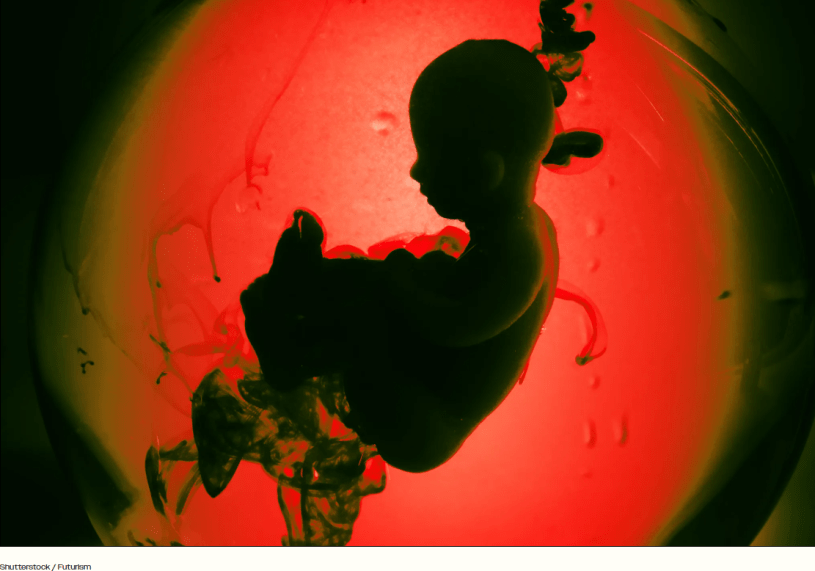
Editing the genes of a human embryo remains highly controversial, particularly after Chinese scientist He Jiankui shocked the world eight years ago by doing just that using the popular gene-editing technique CRISPR — and then allowing the embryos to be carried to term and born.
Proponents say the tech could allow us to treat diseases in powerful new ways, while critics liken it to eugenics, arguing it could set a dangerous precedent by allowing parents to select certain desirable traits.
It should therefore come to no surprise that the most recent attempt to edit human zygotes, embryos at their earliest single-cell stage, has once again fueled controversy. As detailed in a yet-to-be-peer-reviewed paper, a team led by Columbia University geneticist Dieter Egli used a technique called base editing, essentially editing a single strand of DNA, to edit two genomic sites.
The goal wasn’t to establish promising new therapeutic or medical treatments, as the scientists noted in their paper. Instead, they attempted to demonstrate that base editing was a viable way of editing sequences of DNA in embryos without risking the damage earlier attempts involving CRISPR have caused.
But as Scientific American reports, the latest research could lay the groundwork for more controversial work, despite the embryos not being carried to term, with pioneering genome‑editing researcher and Alexis Komor, who helped develop CRISPR, telling the publication that the “cat’s out of the bag.”

