
The extraordinary story you’re about to read, by Camila Lourdes Galarza, is a dark look into what it’s like to live and die on the other side of U.S. headlines. As we expand deeper into reporting on South and Central America, particularly with the hiring of our Latin America bureau chief José Luis Granados Ceja, this is the kind of journalism we hope to be bringing you more of. (Granados Ceja just returned from a reporting trip to Cuba; watch him discuss the situation there on Breaking Points.)
This expansion has been made possible by a surge in reader support over the past six months or so, and if you want to see more of this, please consider upgrading to a paid subscription or make a one-time or recurring contribution. Reporting like this isn’t cheap, but the world is far poorer if it doesn’t exist. If you do upgrade, please put a note in there that you’d like to see more Latin America reporting.
QUITO, Ecuador—The last time Roxanna Mero heard from her husband Carlos was January 19. Calling from sea on an emergency line, he said an “American aircraft, two drones, and a blue patrol ship” had been circling La Fiorella, the Ecuadorian fishing boat he captained. The presence of an airplane worried him, given that Trump’s extrajudicial airstrikes across the Pacific and Caribbean have killed more than 170 people in 6 months, but a local coast guard had already inspected the vessel, found nothing and cleared them to continue.
The next day, the boat went up in smoke. The eight fishermen aboard have not been seen since.
Three independent accounts from relatives of the missing crew assert that eyewitnesses, on a nearby raft at the time of the incident, saw La Fiorella engulfed in flames. “They’ve been threatened not to speak to the press. They’re scared for their lives,” said Angelica Lourdes Mero, whose son and spouse are among the disappeared men.
Ninety days after La Fiorella vanished, Roxanna told Drop Site News, “No search team has been sent out. In Manta, we live with constant military helicopters circling overhead every hour but none of them have been used to find my husband.” The helicopters are part of ongoing US-Ecuadorian joint operations, despite 60% of Ecuadorians voting to uphold the constitutional ban on foreign military presence in their territories this past November. The ban was originally introduced in 2007, precisely due to the U.S. military sinking fishing boats off the coast of Manta.
Under right-wing president Daniel Noboa, Ecuador has become a critical U.S. proxy in the region; described as a “North American colony” by political analyst and former advisor to Ecuador’s Secretary of International Relations Daniel Granja.
The military regime, which rules by martial law, has stonewalled all inquiries into the whereabouts of the fishermen. “They slammed the door in our face,” Angelica Mero told Drop Site News.
The United Nations Committee on Forced Disappearances, which was already investigating Noboa’s armed forces prior to this incident, has issued a letter demanding answers on La Fiorella. Opposition lawmaker Mónica Palacios echoed those calls, announcing she will bring this case directly to the U.N.
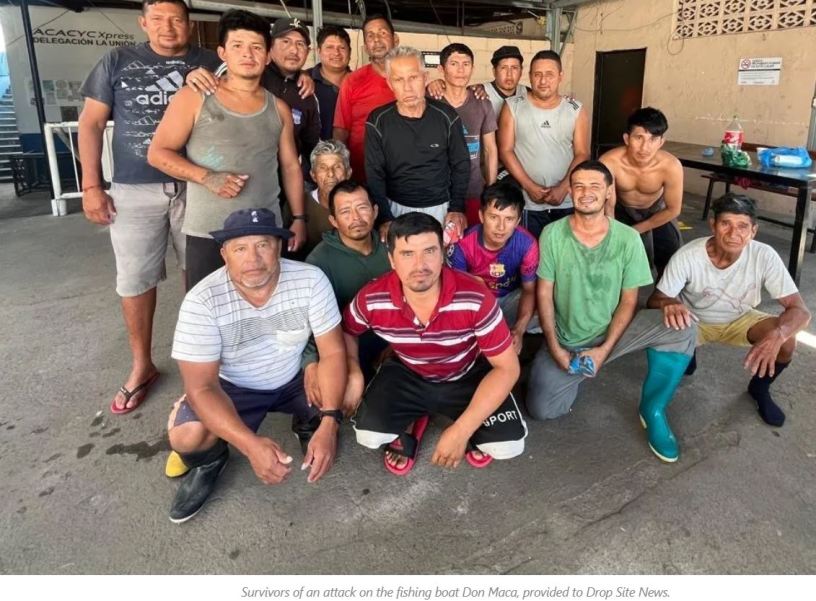
Now, 36 survivors of two Pacific attacks fitting a similar profile alleged that they were abducted and tortured by American forces and taken by boat all the way to El Salvador before being returned to Ecuador. Drop Site spoke to multiple survivors and attorneys from both boats.
Drop Site reached out to the U.S. Southern Command for comment on all three incidents; they said they had no information to provide and directed questions to Ecuador. Drop Site asked Ecuador’s Port Authority for comment. They hung up after hearing the call was from journalists.
 PERCEPTION RESET