
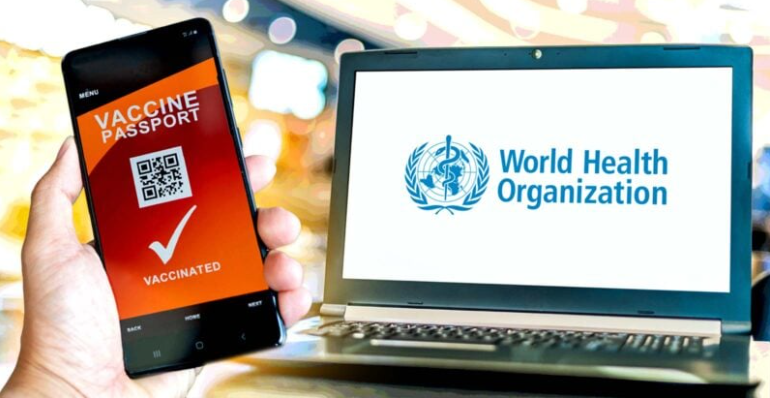
Five years after digital vaccine passports were introduced during the COVID-19 pandemic, the World Health Organization (WHO) is partnering with an investment firm linked to COVID-19 vaccine maker BioNTech and the Gates Foundation to roll out “interoperable digital health wallets.”
The WHO announced earlier this week that it is partnering with Temasek, a firm owned by the Singapore government that participated in a $250 million investment in BioNTech in June 2020 — a few months before BioNTech released a COVID-19 vaccine in conjunction with Pfizer.
The initiative “builds on lessons from the COVID-19 pandemic, which demonstrated the urgency of reliable, verifiable digital health documentation,” the WHO said.
The initiative will begin with digital international certificates of vaccination or prophylaxis and will later expand to “broader personal health summaries.” It will be piloted in the 11 member states of the Association of Southeast Asian Nations to develop a “replicable model” for potential export to other countries.
The initiative is a result of last year’s amendments to the WHO’s International Health Regulations (IHR), which called for “globally recognized digital health certificates.”
Kee Kirk Chuen, Temasek’s head of Health & Well-being, said the COVID-19 pandemic “showed how important it is for health records to be trusted, verifiable and able to travel with people across borders.”
But Natalie Winters, co-host of “Bannon’s War Room,” countered that the WHO is attempting to formalize what was once touted as a temporary response to the pandemic.
“During COVID, digital health verification systems determined whether people could travel, work, or enter public spaces based off vaccination status,” Winters wrote on Substack. “Those systems were justified as temporary. Now they are being formalized into something much broader and far more durable.”
Dr. David Bell, a public health physician, biotech consultant and senior scholar at the Brownstone Institute, said private interests are driving the WHO’s initiative.
“The WHO is required to concentrate on vaccine passports as they are important from an investment viewpoint to its major funders, who fund the WHO through voluntary specified funding — meaning the WHO is required to follow the directions of the funder.”
Bell said major WHO funders, including the Gates Foundation, “have direct financial interests in increasing the use of both vaccines and digital platforms.”
 PERCEPTION RESET