
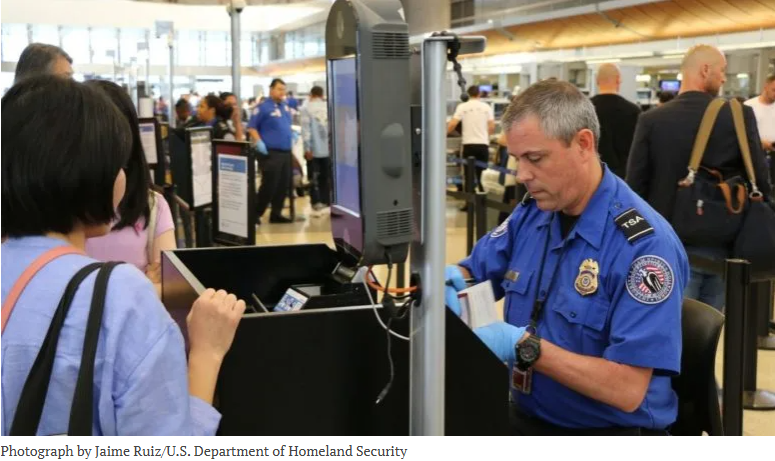
Do you put up with TSA because they keep you safe when you get on an airplane? Well, forget that. There is no public evidence that TSA has caught any person actually carrying out or imminently attempting an Islamist terrorist attack at an airport checkpoint in the last five years, and experts generally note that TSA’s screening programs have not credibly documented a single terrorist caught at the checkpoint in their entire history. Now the door opens for the TSA to collect your DNA. ⁃ Patrick Wood, Editor.
New strict customs laws have gone into effect, allowing government officials to request tourists’ DNA in some cases. The new biometric data collection started on December 26, just ahead of the new year.
The new rule targets non-citizens entering or leaving the US, according to government documents seen by Reuters. Travelers will now be subjected to facial recognition photos at the airport to help match them against existing records. Those facial recognition pictures will be stored for up to 75 years, according to the documents.
Under the new law, Department of Homeland Security officials may request additional biometric information, including fingerprints or DNA, from non-citizens. The updated security measures are meant to “deter the filing of frivolous claims and provide operational consistency,” according to the government.
The new biometric rules would also remove any age restrictions on facial recognition, meaning that any foreigner is now subject to the biometric measures. Up until now, there were restrictions on who could be scanned using facial recognition. Travelers under 14 years old and those over 79 years old were exempt from those requirements.
Biometric data has been collected from foreign visitors for years, but now the government is pushing to collect more information to tighten border security. The new rules expand what officials are legally allowed to ask for.
Select visitors planning to stay in the US for more than 29 days are now required to pay a $30 fee. Those who refuse to pay the fee and be fingerprinted could be hit with a $5,000 fine.
 PERCEPTION RESET