
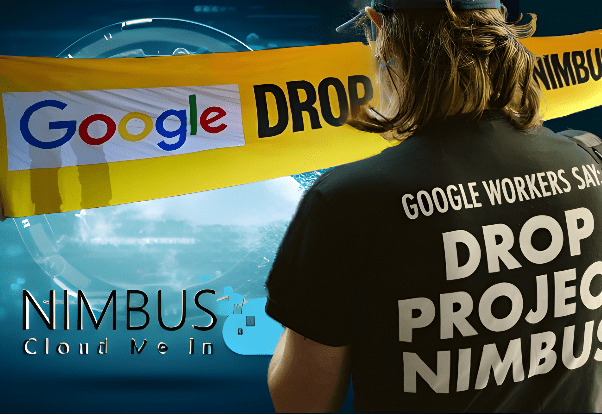
In 2021, Google and Amazon inked a $1.2 billion contract with the Israeli government, a deal to provide Netanyahu’s administration and its military with advanced cloud computing and AI services that would come to haunt both companies. To secure the lucrative Project Nimbus contract, the tech giants agreed to disregard their own terms of service and sidestep legal orders by tipping Israel off if a foreign court demands its data, a stunning departure from industry norms.
The contract’s stipulations are unprecedented. Google and Amazon are prohibited from restricting how Israel uses their products, even if this use breaches their terms of service. Should either company attempt to pull the plug, they face severe financial penalties and potential litigation. This clause reportedly helped them win the contract over Microsoft, which refused to accept similar terms.
Buried in leaked Israeli Finance Ministry documents is a provision that reads like something from a spy thriller: a secret payment system designed to circumvent legal disclosure requirements. If a U.S. court orders Google or Amazon to hand over Israeli data, the companies must send Israel 1,000 shekels, matching the country’s +1 dialing code. A request from Denmark? 4,500 shekels, corresponding to +45. And if legal restrictions explicitly bar any hint about the data request’s origin, the payment jumps to 100,000 shekels.
This “winking mechanism,” as sources familiar with the negotiations describe it, represents just one of the extraordinary concessions Google and Amazon made to secure Project Nimbus. The leaked documents reveal that the tech giants agreed to terms they had never accepted before: Not only can they not restrict how Israel uses their products, even if that use violates their own terms of service, but they also cannot pull out, even under public pressure. In other words, they crucially surrendered their ability to enforce the ethical guidelines they so publicly tout.
Israeli officials drafted these provisions years before October 7, anticipating the very scenario now unfolding in the Occupied Palestinian Territories (OPT), and around the World, with a drastic increase in international legal scrutiny over the use of American technology in military operations against Palestinians. Their foresight appears prescient: while Microsoft recently terminated its contract with the Israeli military after discovering it was being used to store surveillance data on Palestinian civilians, Google and Amazon remain contractually bound, their hands tied by clauses they agreed to in pursuit of profit.
As Israel’s military operations in Gaza intensified, so too did internal dissent. Google and Amazon have faced growing criticism from employees and investors over the role Nimbus has played in Israel’s devastating assault on Gaza, which numerous human rights organizations and a UN commission of inquiry have labeled a genocide. In December 2023, 1,700 Amazon employees petitioned CEO Andy Jassy, warning that the company was “bolstering the artificial intelligence and surveillance capabilities of the Israeli military used to repress Palestinian activists and impose a brutal siege on Gaza”.
The pushback reached a boiling point in spring 2024, when a Google Cloud engineer shouted “I refuse to build technology that empowers genocide” at a company event, prompting his immediate dismissal. Weeks later, dozens of employees staged sit-ins at Google’s New York and Sunnyvale headquarters, resulting in 28 terminations, a number that would eventually climb to 50 as the company cracked down on dissent.
A joint investigation by +972 Magazine, Local Call, and The Guardian has uncovered that Google and Amazon agreed to unusual “controls” imposed by Israel as part of the deal, anticipating potential legal disputes regarding the technology’s application in the occupied West Bank and Gaza…
 PERCEPTION RESET