
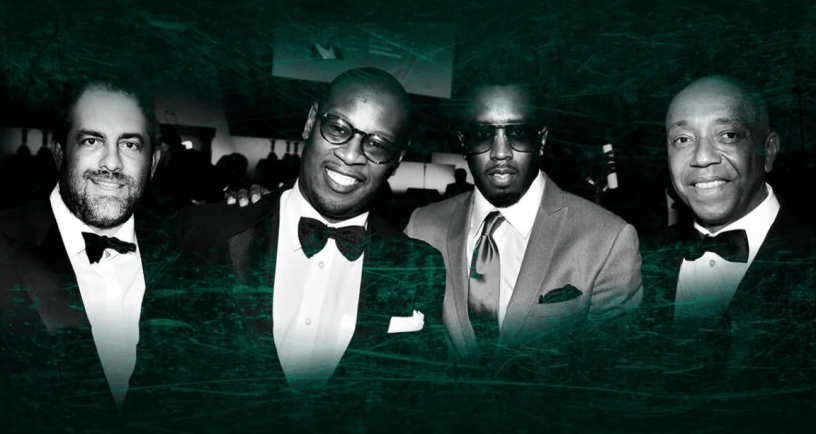
Beginning in late 2023, a series of startling and unsettling allegations against Sean Combs –– a record executive and rapper known over the years by stage names like “Puff Daddy,” “P. Diddy” and presently “Diddy” –– have emerged. As the allegations and lawsuits facing Combs have snowballed, so, too, has public interest in the case. The sheer amount of accusations suggests that Combs, in addition to being very sexually and physically violent, filmed many assault encounters and orgies that occurred at his now notorious “Freak Off” parties, sometimes with hidden or security cameras. He also now stands accused of “operating an empire of sexual crimes,” with federal agents having alleged that several of Combs’ victims were of “barely legal” or “barely illegal” age at the time of their abuse. Combs’ apparent documentation of these events strongly suggests that he was interested in keeping these records for more than his perverse enjoyment, as either a form of a protection or as a means to control those who appeared in these films, i.e. blackmail.
As a result, speculation has grown about who is allegedly on the “list” of people filmed by Combs in this way, prompting comparisons to the alleged “list” of sex trafficker, pedophile and intelligence asset Jeffrey Epstein. The comparisons between Epstein and Combs have only grown, with even the homeland security agents who raided Combs’ Miami home suggesting that Combs was “as bad as Epstein.”
However, as has long been a theme of Unlimited Hangout’s Epstein-related reporting, including the book One Nation Under Blackmail, the Jeffrey Epstein case has been poorly explored by the federal government, mainstream media outlets, and even many independent media outlets. A deeper examination of the Epstein case makes it clear that Epstein was not the sole mastermind or sole beneficiary of the sex trafficking and blackmail operation in which he engaged. Instead, Epstein served as an operator for a larger, monied network of oligarchs with extensive organized crime connections in addition to significant affiliations with intelligence agencies. He was also more than a sex trafficker for this group, having aided this network extensively in arms trafficking, money laundering and other crimes (many financial) that fall outside of the focus on his sex-related offenses.
It should come as no surprise upon closer examination of Sean Combs that, like Epstein, he was operating on behalf of a larger network that he did not ultimately control. Instead, it arguably controlled him. As this three-part series from Unlimited Hangout will endeavor to show, Combs was acting on behalf of an oligarch network that directly overlaps with that of Epstein. However, Combs used to influence a different industry and a different community for the benefit of these intelligence and organized crime-connected oligarchs.
In Part I of this series, we will examine the often overlooked early years of Combs and his entrance into the music industry. While Combs’ own rise (from birth to the founding of Bad Boy Records in 1993) is certainly chronicled, a major focus of this piece is on the mentors and figures who facilitated his rise into the upper echelons of hip hop celebrity, especially Andre Harrell and Clive Davis, as well as other figures who had a significant influence on Combs’ early career into the music industry, like Russell Simmons. Not only did these figures bring Combs into the music industry, they also stand accused of initiating Combs into the types of activities he is now in prison for, awaiting trial.
Also explored in this piece are the corporations behind the success of Combs’ mentors and later Combs himself, namely the Music Corporation of America (MCA) and Arista Records. When taken together with other claims from the period, namely about efforts to manipulate hip hop for the benefit of the private prison industry in the early to mid-1990s, it appears that this network’s interest in Combs, as well as his mentors, was part of something much larger that sought to target not just the hip hop industry itself, but the African-American community at large.
Subsequent installments of this series will examine Combs’ activities –– in music, in retail and beyond –– and how the same network detailed in Part I also enabled those activities, which notably parallel Combs’ deeper descent into acts of sexual violence and abuse. Another installment will examine how one close associate of Combs also connects very directly with the sex trafficking activities of Jeffrey Epstein, indicating that the overlap between the two cases is more significant than previous reporting and the current cases against Combs have suggested.
Sean Combs was born in Harlem, NY on November 4, 1969 to a schoolteacher and ex-model named Janice Combs (née Smalls) and Melvin Earl Combs, an Air Force serviceman and sometimes associate of American Gangster heroin kingpin Frank Lucas. Melvin Combs helped make ends meet by running a number of legal and less-than-legal operations; including a cab and limousine chauffeuring company, multiple bars Combs owned, and a portion of Harlem drug traffic.i A toddler-aged Combs tagged along with Melvin on visits to Lucas’ home, even playing with his daughter. According to an interview prior to his death, the aged gangster alleged that Combs didn’t share his toys.
A Bad Boy from Birth
“I learned early in life that there’s only two ways out of that [lifestyle]: dead or in jail,” explained Combs in 2013, speaking of his father’s lifestyle. “It made me work even harder… I have his hustler’s mentality.” According to contemporaries, Melvin was an immaculate dresser. While less flashy than Lucas, who once attracted the attention of the feds by sitting ringside at a Muhammad Ali –Joe Frazier bout in a $100,000 fur coat, Melvin still pulled out enough stops to be granted the street nickname “Pretty Melvin.”
When Sean Combs was 3 years old, Melvin Combs was gunned down while sitting in a loitering car near Central Park West. Per Susan Traugh, Melvin was shot in the head, likely at point blank range considering he was seated in his Mercedes-Benz—this manner of a hit is consistent with an enforcer killing.ii According to an interview conducted by author Zack O’Malley-Greenburg, someone in Melvin Combs’ circle believed he was about to inform on a sensitive business deal to law enforcement and that this is what precipitated his murder.iii From this, former associates and law enforcement have speculated that Melvin Combs was a federal informant. If allegations from incarcerated contemporaneous label heads like Suge Knight and former bodyguards are to believed, Sean Combs may have done the same, allegedly informing for the FBI over the course of his career.
A recent article from journalist Legs McNeil lays out the Lucas-Combs criminal enterprise in greater detail than previously reported. It also shows that Melvin Combs, in addition to his dealings with Lucas, had an arguably deeper affiliation with the Gambino crime family near the end of his life. The Gambinos may have even put out his hit. McNeil writes:
Melvin Combs, a small-time hustler, was introduced to selling heroin when Lucas fronted him several kilos from his Golden Triangle connection. He joined the crew of Willie Abraham, the 42-year-old owner of the Harlem Gold Lounge and a convicted heroin dealer who’d already spent five years in jail. Unlike Lucas, Abraham was getting his heroin from the Mafia—specifically, the Gambino crime family.
In 1971, Melvin was arrested for possession of heroin and $45,000 in cash. When Abraham’s heroin‐cutting mill was raided later that year, and Abraham was charged with participating in an extensive conspiracy to distribute $5 million a year in heroin at the wholesale level in Harlem, the Bronx, and Westchester County, Melvin was suspected by Alphonse “Funzi” Sisca, head of the Gambinos’ New Jersey crew, of being a rat.
McNeil also noted that “The New York Times reported that the prosecutor in the Abraham case told the judge that law enforcement believed Melvin’s murder ‘might ultimately be traced to members of the heroin‐distributing conspiracy.’” A newspaper clipping from the Saturday, February 24th, 1973 edition of the New York Daily News reveals that the Gambino-backed Willie Abraham crew had plenty or reason to suspect Combs of informing or at least blamed him for the arrests. The article notes that their relationship to Combs appears to have led directly to Abraham and his collaborators’ convictionson conspiracy charges, including Gambino man Alphonso Sisca of New Jersey:
Willie Abraham […] was found guilty in Manhattan Federal Court yesterday of being a kingpin narcotics wholesaler whose ring flooded the metropolitan area with more than 1,000 pounds of drugs in 2 1/2 years.
A task force of federal, state and local cops smashed the ring in a series of raids in December 1971 as the result of information obtained through the court approved wiretaps on another big time narcotics dealer’s phone. The dealer, Melvin Combs, 31, of 1853 Central Ave., Yonkers, was found shot to death in January 1972 on Manhattan’s West Side.
This evidence of a reported “wiretap” supports the claim that Abraham and his Gambino Family backers had Combs murdered because they blamed him for the arrests, regardless of whether Combs had actually been an informant. Throughout this article, connections to the Gambino crime family, as well as the Genovese crime family, are a recurring theme.
 PERCEPTION RESET