

The world could be on the cusp of another food inflation shock as the benchmark for world food commodity prices recorded the fastest monthly increase in 18 months in September.
A perfect storm of war in Eastern Europe and broadening conflicts in the Middle East, snarled maritime supply chains, extreme weather across croplands, de-growth climate change policies pushed by the far-left in the West, and rogue central bank money printing have all contributed to sticky food inflation.
The Food and Agriculture Organization of the United Nations’ Food Price Index, which tracks the international prices of a basket of globally traded food, averaged 124.4 in September, up 3% from August and 2.1% higher versus the same month one year ago.
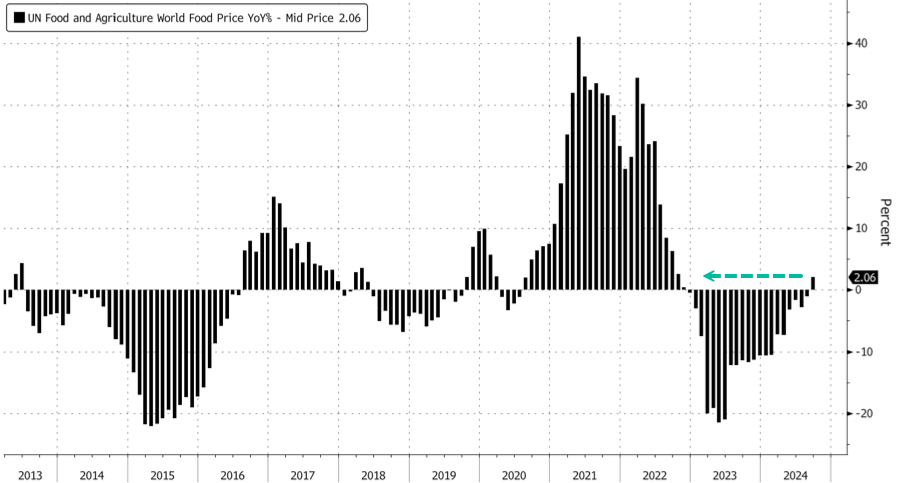
FAO noted in the report that sugar, including wheat and edible oil, was the leading cause of the overall spike.
Here’s the breakdown of FAO’s sub-indices:
- The FAO Sugar Price Index registered the largest increase in September, rising by 10.4 percent. This was driven by worsening crop prospects in Brazil and concerns that India’s decision to lift restrictions on sugarcane use for ethanol production may affect export availabilities from the country.
- The FAO Cereal Price Index increased by 3.0 percent during the month, led by higher wheat and maize export prices. International wheat prices increased due largely to concerns over excessively wet conditions in Canada and the European Union, though this was partly offset by competitively priced supplies from the Black Sea region. World maize prices also climbed, influenced by low water levels on key transportation routes along the Madeira River in Brazil and the Mississippi River in the United States of America. By contrast, the FAO All Rice Price Index declined by 0.7 percent, partly reflecting generally quiet trading activities.
- The FAO Vegetable Oil Price Index increased by 4.6 percent from August, with higher quotations across the board for palm, soy, sunflower and rapeseed oils. The rise in international palm oil prices was due to lower-than-expected production in major Southeast Asian producing countries, while the rebound in soyoil quotations was primarily due to lower-than-expected crushings in the United States of America.
- The FAO Dairy price Index rose by 3.8 percent in September, with quotations up for whole milk powder, skim milk powder, butter and cheese.
- The FAO Meat Price Index increased by 0.4 percent, mainly due to higher poultry meat prices driven by strong import demand for Brazil’s product. World bovine and pig meat prices remained stable, while those for ovine meat declined slightly from August levels.
 PERCEPTION RESET
