
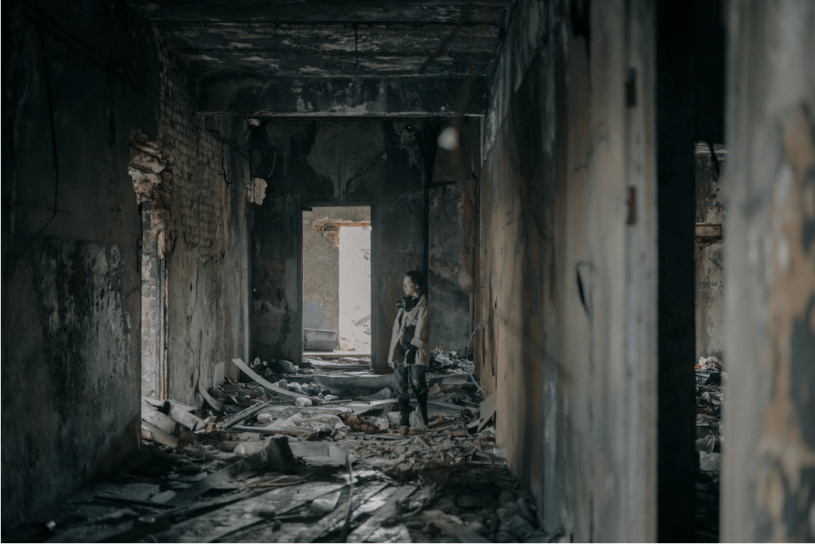
In a chilling exposé, Israeli soldiers have confessed to a disturbing reality: they were given unchecked authority to shoot Palestinians, including civilians, in Gaza, often without clear rules of engagement. Testimonies reveal a landscape littered with civilian corpses left to decay, homes deliberately set on fire, and a callous indifference toward human life. Shockingly, soldiers describe shooting simply out of boredom or to demonstrate power, painting a grim picture of unchecked violence and systemic abuses. The revelations raise urgent questions about military ethics and the treatment of civilians in conflict zones.
Early in June, Al Jazeera broadcast a number of unsettling recordings that showed what it called “summary executions”—three different instances of Israeli forces shooting dead multiple Palestinians who were strolling close to the Gaza Strip’s coastline route. In every instance, the Palestinians were seen to be unarmed and did not present the soldiers with any immediate threats.
Because of the harsh restrictions placed on journalists in the besieged enclave and the ongoing risk to their lives, such footage is uncommon. That being said, the experiences of six Israeli soldiers who were released from active service in Gaza in recent months and talked Local Call align with these executions, which seemed to have no security purpose. The soldiers’ accounts of being permitted to shoot Palestinians, including civilians, during the conflict were consistent with the statements made by Palestinian eyewitnesses and medical professionals as reported by +972 Magazine.
The six sources described how Israeli forces regularly murdered Palestinian civilians for no other reason than that they had entered an area designated as a “no-go zone.” All but one of the sources spoke under the condition of anonymity. The reports depict a scene where civilian corpses are scattered throughout the countryside, either to decay or to be consumed by stray animals. The army merely conceals the corpses from view before the arrival of international relief convoys, preventing “images of people in advanced stages of decay from coming out.” Additionally, two of the troops spoke of a deliberate policy of burning down Palestinian homes once they were taken over.
According to multiple accounts, the liberty to fire without limitations provided soldiers with an outlet to release tension or alleviate the monotony of their everyday schedule. “People want to experience the event [fully],” S., a reservist who served in northern Gaza, recalled. “I personally fired a few bullets for no reason, into the sea or at the sidewalk or an abandoned building. They report it as ‘normal fire,’ which is a codename for ‘I’m bored, so I shoot.’”
Despite several requests to the High Court of Justice, the Israeli military has not disclosed its open-fire policies since the 1980s. Yagil Levy, a political sociologist, claims that since the Second Intifada, “the army has not given soldiers written rules of engagement,” leaving a lot up to the commanders and infantrymen’s interpretation. Sources stated that in addition to facilitating the deaths of over 38,000 Palestinians, these permissive guidelines were partially to blame for the recent spike in the number of troops killed by friendly fire.
“There was total freedom of action,” said B., another soldier who served in the regular forces in Gaza for months, including in his battalion’s command center. “If there is [even] a feeling of threat, there is no need to explain — you just shoot.” When soldiers see someone approaching, “it is permissible to shoot at their center of mass [their body], not into the air,” B. continued. “It’s permissible to shoot everyone, a young girl, an old woman.”
B. continued by describing an incident that occurred in November in which a school near Gaza City’s Zeitoun neighborhood—which had been a shelter for displaced Palestinians—was evacuated and three civilians were killed by soldiers. Instead of leaving to the right, where the soldiers were positioned, the army instructed the evacuees to leave to the left, toward the sea. Those who took the incorrect turn in the following commotion were fired at instantly as a shootout broke out inside the school.
 PERCEPTION RESET