
It is important to study self elected “the global leaders” in their respective fields. They all seem to have the ability to forecast the future to a high level of precision. People call it predictive programming, but if you really study their published material and look at the reality that is playing out now, it becomes quite clear that the planning process is rather elaborate on their part. Lockstep has been going on for decades. Ray Kurzweil in his book “ The Singularity is Near” goes into extreme detail about how exactly they plan to transform humanity into Human 2.0 and eventually 3.0 through the use of self assembly nanotechnology. Carefully referenced, Ray makes it easy for his followers to get their instruction map for the future. Like all globalist technocrats, their writing sounds so easy going, futuristic and optimistic – describing a fantastic future of curing all diseases, immortality and universal abundance. The catch is that their words have a much different meaning. When looking at how this vision plays out, one realizes that their Orwellian nightmare roadmap is playing out now to the planned extermination of most of humanity.
I highly recommend reading the book, its a treasure trove of information.
On page 248 he writes:
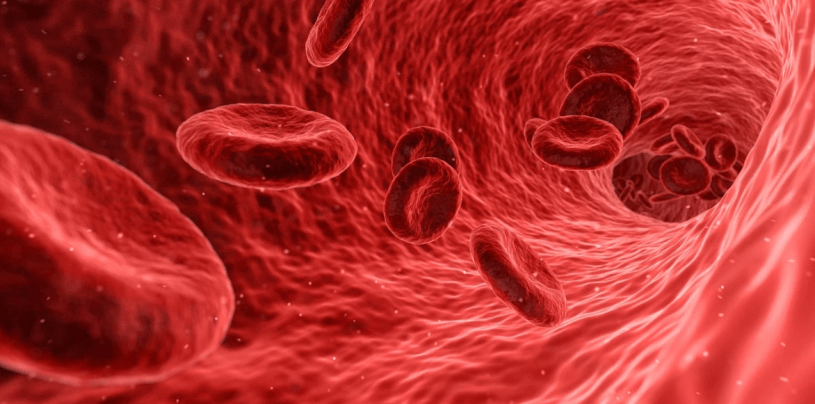
“Scientists at the University of Texas have developed a nanobot-size fuel cell that produces electricity directly from the glucose-oxygen reaction in human blood. Called a “Vampire bot” by commentators, the cell produces electricity sufficient to power conventional electronics and could be used for future blood-borne nanobots.
Japanese scientists pursuing a similar project estimated that their system had the theoretical potential to produce a peak of one hundred watts from the blood of one person, although implantable devices would use far less. ( A newspaper in Syndrey observed that the project provided a basis for the premise in the Matrix movies of using humans as batteries.)
The harvesting of both glucose and ATP is described. ATP is the power source of our human cells. There certainly seems to be energy harvesting going on in human blood as evidenced by Clifford Carnicoms and my joint research on the bloods electrical conductivity and estimated powerloss of up to 47%.
Later he writes about self assembly polymers as electronic devices:
Self assembling electronic devices ( for example, self-organizing biopolymers), if perfected, will require less energy to manufacture and use and will produce fewer toxic by products that conventional semiconductor manufacturing methods.
He also discusses ( p234)
As nanobased replicators become more sophisticated, more capable of extracting carbon atoms and carbon based molecular fragments from less well controlled source materials, and are able to operate outside of controlled replicator enclosures such as in the biological world, they will have the potential to present a grave threat to the world.
Here are the news articles from 2003, already talking about powering devices embedded in the human body.
Power from blood could lead to ‘human batteries’
A device that produces electricity from blood could be used to turn people into “human batteries”. Researchers in Japan are developing a method of drawing power from blood glucose, mimicking the way the body generates energy from food. Theoretically, it could allow a person to pump out 100 watts – enough to illuminate a light bulb. But that would entail converting all the food eaten by the individual into electricity. In practice, less power would be generated since food is needed by the body.
However the scientists say the “bio-nano” generator could be used to run devices embedded in the body, or sugar-fed robots. The team at electronics giant Panasonic’s Nanotechnology Research Laboratory near Kyoto has so far only managed to produce very low power levels. But the scientists ultimately expect to gain much greater performance from the device. The battery is based on an enzyme capable of stripping glucose of its electrons, The Engineer magazine reported.
 PERCEPTION RESET