Plummeting # of Pregnancies & Offspring In Ivermectin Rabbit Study
In a study called ‘Adverse effects of repeated doses of Ivermectin alone or with the combination of vitamin C on reproductive system of female rabbits’ by Jawad et al, researchers tested different amounts of Ivermectin and Vitamin C on rabbits and measured the number of offspring they beget.
“The results of fertility study revealed adverse effect of ivermectin therapy on fertility and block the pregnancy in all treated group except the fifth group which administered vitamin C only as compared with control group… In conclusion: Ivermectin has adverse effects on reproductive efficacy on female rabbits”
A very stark, concerning dropoff in the number of pregnancies and total offspring when the Ivermectin is introduced.
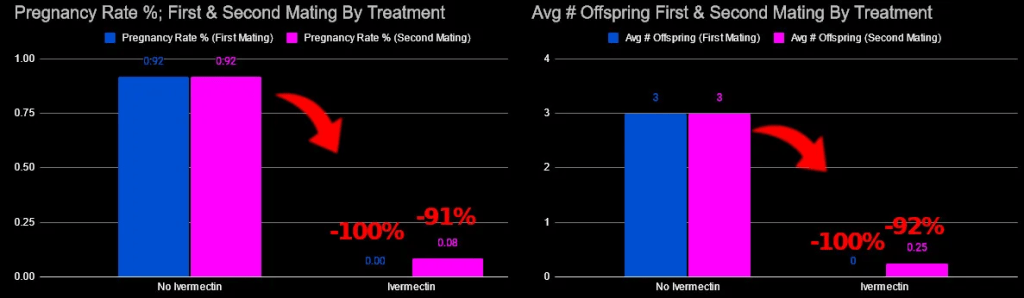
Here’s the aggregate data of Ivermectin vs no Ivermectin rabbit pregnancy rates & average number of offspring:
We see a massive reduction of pregnancy rate of 100% for the first mating and 91% for the second mating in the rabbits who received any ivermectin. We also find a plummeting average for number of offspring beget: a 100% drop in the first mating and a 92% reduction in the second mating.
“Ivermectin has adverse effects on reproductive efficacy on female rabbits”
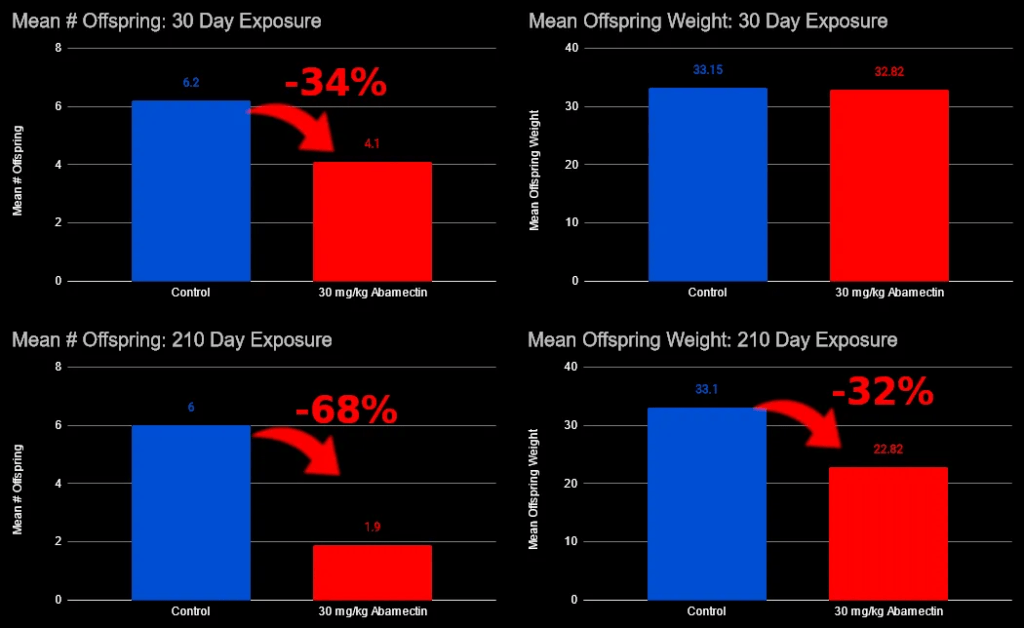
Smaller Litter Sizes & Offspring Weights in Rattus Norvegicus Exposed to Abamectin
In a study called ‘Abamectin Induced Biochemical and Histopathological Changes in the Albino Rat, Rattus Norvegicus’ (full report) by Abd-Elhady & Abou-Elghar, researchers explored the negative effects of ivermectin of male rat fertility
“Fertility was also significantly reduced in male rats ingesting abamectin in group T2. The number of offspring was significantly reduced.”
Assessment Of Abamectin’s Antifertility Effects In Male Rats
In a study called ‘Assessment of Antifertility Activities of Abamectin Pesticide in Male Rats’ by Elbetieha and Da’as (full report)
“The number of viable fetuses was significantly reduced in females mated with males that ingested abamectin at 1.87 or 2.13 mg/animal/day.”
“Significant increases in the total number of resorptions and the number of females with resorptions were observed in females mated with the exposed males at all three concentrations.”
“Testicular sperm counts and daily sperm production were significantly decreased in exposed males.”

 PERCEPTION RESET