
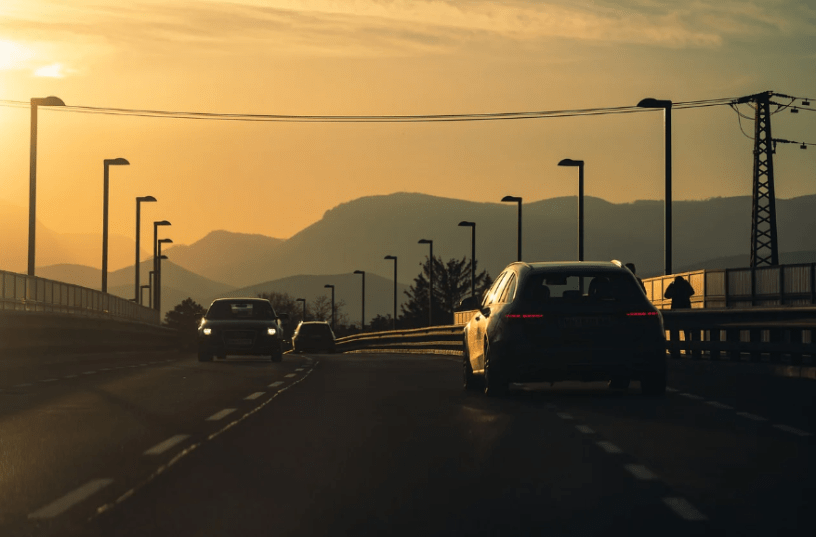
Germany’s transport minister has warned that driving will have to be banned at the weekends unless the country’s net zero laws are changed.
Volker Wissing’s FDP party wants the law amended so the polluting transport sector can miss carbon emissions reduction targets, as long as Germany as a whole reaches them.
But the change is opposed by the Greens, who are part of the three-way coalition with the pro-business FDP and the Social Democrats (SPD), led by Olaf Scholz, the chancellor.
Negotiations over the law have dragged on since September last year. In a bid to heap pressure on his coalition partners to amend the law, Mr Wissing said that he would have to enforce a ban on weekend driving to abide by the law unless it was changed before mid-July.
The Greens accused Mr Wissing of stirring up unfounded fears at a time when German enthusiasm for climate-friendly legislation is at a low ebb during the cost of living crisis.
Julia Verlinden, the Green’s parliamentary group leader, said there were other ways to tackle pollution, including introducing a speed limit on the nation’s autobahns.
However, a speed limit on the motorways is controversial. Mr Wissing has ruled it out, as have opposition parties the CDU and hard-Right Alternative for Germany.
Greenhouse emissions in Europe’s biggest economy fell to the lowest level in 70 years in 2023, but the transport sector has been consistently failing to meet its climate targets.
According to the current climate protection law, the ministry responsible for underperforming sectors must launch an immediate programme to put them back on track.
Mr Wissing has not yet done so. His ministry claims reforming the sector is more challenging than other areas of the economy because it affects people’s everyday lives and cannot be changed quickly.
“A corresponding reduction in traffic performance would only be possible through restrictive measures that are difficult to communicate to the population, such as nationwide and indefinite driving bans on Saturdays and Sundays,” he wrote in a letter dated Thursday to coalition parliamentary group leaders.
The letter was heavily criticized by coalition partners and environmental groups.
 PERCEPTION RESET