
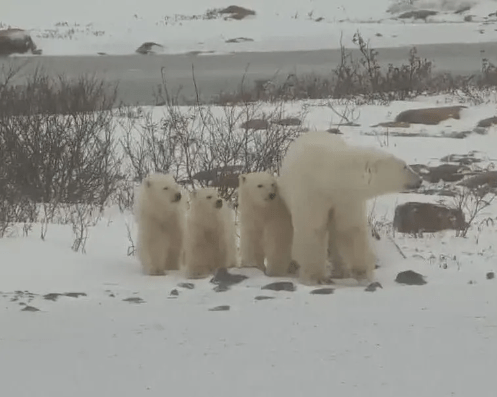
A sow and a pair of half-grown cubs recently paid a visit to the Polish Research Station in southwestern Svalbard without causing any more trouble than racing heart-rates, according to a report in The Guardian today.
This year the team had seen more polar bears than usual, he added. Usually there were around 20 bear sightings a year, but this year there had been close to 40 sightings since June and they expected to see more in their final three months.
“So far, we have not observed any clearly emaciated individuals. This year is probably a good year for Svalbard’s polar bears because there is a lot of sea ice here compared to recent years,”
Polish Research Station, Hornsund

Svalbard sea ice above average
Most of the ice around Svalbard is mobile pack ice, and contrary to expectations given reported global temperatures, coverage has been hovering about average since September last year, depending on winds, with levels dropping briefly in early winter but rebounding to above average over the last week or so. The chart below hasn’t been updated since 27 March but daily reports to 2 April from the Norwegian Ice Service confirms that readings are still above the long-term 1991-2020 average.
 PERCEPTION RESET