
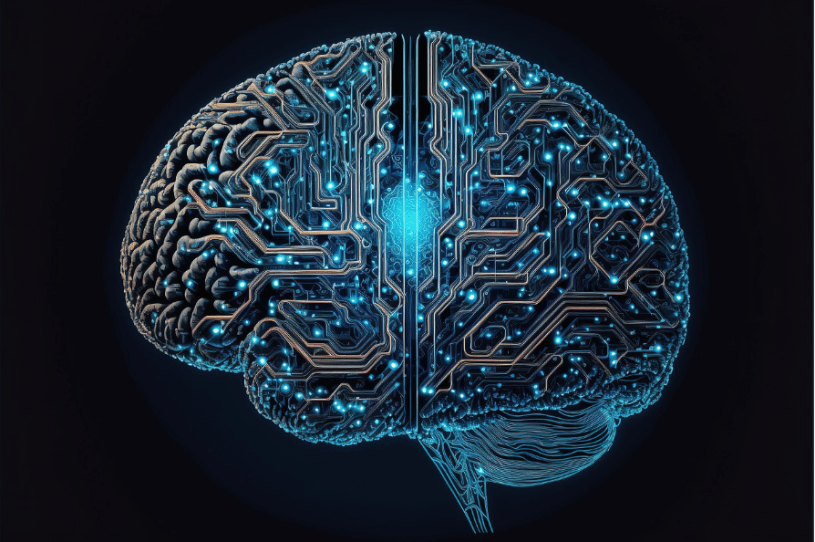
The brain is the most complicated object in the universe. Can researchers solve its greatest mysteries?
In the middle of 2023, a study conducted by the HuthLab at the University of Texas sent shockwaves through the realms of neuroscience and technology. For the first time, the thoughts and impressions of people unable to communicate with the outside world were translated into continuous natural language, using a combination of artificial intelligence (AI) and brain imaging technology.
This is the closest science has yet come to reading someone’s mind. While advances in neuroimaging over the past two decades have enabled non-responsive and minimally conscious patients to control a computer cursor with their brain, HuthLab’s research is a significant step closer towards accessing people’s actual thoughts. As Alexander Huth, the neuroscientist who co-led the research, told the New York Times: “This isn’t just a language stimulus. We’re getting at meaning – something about the idea of what’s happening. And the fact that’s possible is very exciting.”
Combining AI and brain-scanning technology, the team created a non-invasive brain decoder capable of reconstructing continuous natural language among people otherwise unable to communicate with the outside world. The development of such technology – and the parallel development of brain-controlled motor prosthetics that enable paralyzed patients to achieve some renewed mobility – holds tremendous prospects for people suffering from neurological diseases including locked-in syndrome and quadriplegia.
 PERCEPTION RESET