
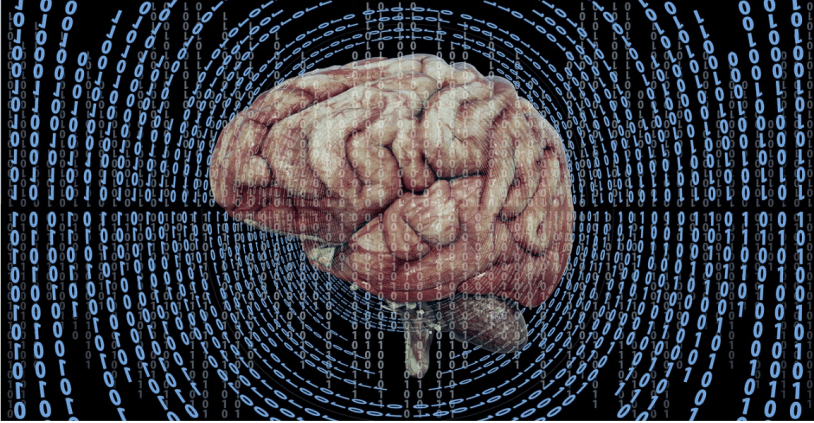
Researchers plugged a “brain organoid” into an artificial intelligence system, using the neural tissue to help complete computational tasks. The experiment could mark a step toward “biocomputers.”
To boost the computing power of artificial intelligence (AI), researchers have combined run-of-the-mill machine learning with a sophisticated 3D model of the human brain made of different types of brain tissue grown in the lab.
These miniature models of the brain, known as cerebral organoids or “minibrains,” have existed in various forms since 2013. But they’ve never been harnessed as a way to augment AI.
The new research uses more traditional computing hardware to input electrical data into the organoid and then decipher the organoid’s activity to produce an output — so the organoid serves only as the “middle layer” of the computing process.
While the method is far from mimicking either the true structure of the brain or how it works, it may provide an early step toward creating biocomputers, which would borrow tricks from biology to make them more powerful and energy efficient than traditional computers. It could also lead to more insight into how the human brain operates and how it is affected by neurodegenerative conditions, such as Alzheimer’s and Parkinson’s disease.
For the new study, published Monday (Dec. 11) in the journal Nature Electronics, the researchers used a technique called reservoir computing; in this context, the organoid serves as the “reservoir.” In such a system, the reservoir stores information and reacts to information that’s inputted. An algorithm learns to recognize changes triggered in the reservoir by different inputs and then translates these changes as its outputs.
Using this framework, the researchers plugged the brain organoid into this system by supplying it with electrical inputs delivered through electrodes.
 PERCEPTION RESET