
Activist Post Editor’s Note: Of course this type of technology can offer breakthroughs in health, but it shouldn’t take science fiction to predict where this can also go horribly wrong, not to mention potential military applications.
Electrical conductors, reminiscent of those in the “Terminator” films, which can guide brain activity, have been successfully grown inside the brains of fish and worms. This advancement could set the stage for innovative treatments for neurological conditions, including Alzheimer’s, according to researchers.
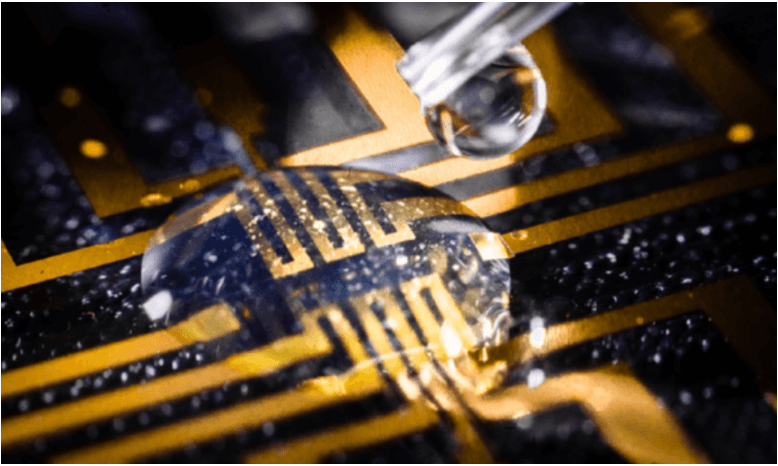
These minuscule electrodes are fabricated from an injectable, viscous gel enriched with enzymes that serve as “assembly molecules.” This technology was cultivated within the tissues of zebrafish and medicinal leeches.
“Contact with the body’s substances changes the structure of the gel and makes it electrically conductive, which it isn’t before injection,” says Dr. Xenofon Strakosas, the study’s lead author and a researcher at Lund University, in a media release. “Depending on the tissue, we can also adjust the composition of the gel to get the electrical process going.”
It’s noteworthy that the zebrafish, despite its simplicity, shares considerable genetic and cellular similarities with humans, even boasting a brain that operates similarly to ours. The transparency and size of this fish offer a unique insight into the workings of the organ.
The aforementioned breakthrough could be likened to a plot from the science fiction film, reminiscent of the Terminator cyborg portrayed by Arnold Schwarzenegger: a microprocessor-controlled robot, armored yet covered in human flesh, skin, hair, and blood.
The electrodes were nurtured within living tissues, with the body’s molecules acting as catalysts. This accomplishment marks a significant leap toward crafting fully integrated electronic circuits within organisms, potentially including humans.
“For several decades, we have tried to create electronics that mimic biology. Now we let biology create the electronics for us,” says Professor Magnus Berggren from Linkoping University, a co-author of the study.
 PERCEPTION RESET