
What’s coming through that needle
Discussions regarding the cumulative amount of mercury and aluminum in vaccines have always been around. I have been reviewing the package inserts of every US approved vaccine and adding up the total amount of foreign matter (by weight) being injected into humans. To do this, I created a spreadsheet to log every ingredient in every vaccine, including the amount of each substance listed as milligrams, micrograms or even nanograms. Believe me when I say, this has been a time-intensive, colossal undertaking.
I started by listing all the vaccines across the top row of the spreadsheet – there are at least 60 vaccines currently approved for the U.S. market, and there are 250 more on the way. Working with this page, I began to list every chemical and every cell type in the first column. In addition to viruses such as polio, measles or influenza, vaccines contain at least 130 different ingredients including metals, chemicals, yeast, antibiotics, sucrose, lactose, and casein. Vaccines have foreign proteins including DNA from humans (albumin and aborted fetal cells) and DNA from animals (chickens, cows, pigs, guinea pigs, monkeys and even insects.)
Most of these ingredients fall into a group called excipients, with subcategories that include adjuvants, which enhance antibody production; stabilizers, which prolong shelf life; and preservatives, which prolong the shelf life of vaccine components. Examining the excipient list more closely, I noticed a number of different bovine ingredients within the various vaccines:
- Bovine casein (milk protein)
- Bovine extract
- Bovine cassation acids
- Bovine serum albumen
- Bovine calf serum
- Bovine formula fed calf serum
- Bovine calf serum protein
- Fetal bovine serum (FBS)
I found this to be curious. Why eight different bovine ingredients? What are the differences between each type of ingredient that necessitates a distinct listing? When I investigated this further, I was appalled by what I found.
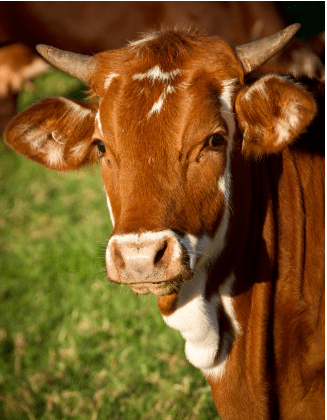
Cow Parts Used for Vaccines
Why are cow parts used for cell cultures and to make vaccines? According to the FDA, “simply because cows are very large animals, commonly used for food, and thus much material is available.“
Wow. Really?
The FDA and other sources go on to report that parts of the slaughtered cows used to make vaccines include lactose and casein from cow’s milk, glycerol from the tallow (fat), gelatin derived from connective tissue, bones, and tendons, and galactose from circulating red blood cells. The milk proteins and gelatin are considered to be stabilizers and are used to “prevent viral degradation.” Allergies to these ingredients have been reported after vaccination.
 PERCEPTION RESET