
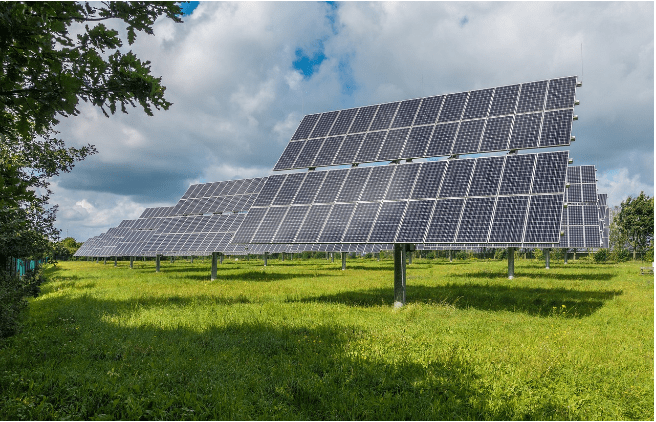
Electric vehicle batteries, solar panels, and wind turbines result in a massive amount of waste and pollution. China is responsible for half of the total electric vehicles in the world—a number that is growing rapidly. About half of its retired batteries are not disposed in an environmentally sound way, causing significant waste and pollution problems detailed below. Batteries can be recycled but the cost is high, as it is with solar panels, which can contain hazardous materials. Most solar panels end up in landfills as do wind turbines, whose large blades are a major factor in their disposal. The United States does not have a policy for recycling these green technologies, which means that U.S. landfills can expect to see a massive increase in disposed materials from them as President Biden seeks to implement his net-zero carbon plan for all U.S. energy by 2050.
Battery Waste and Pollution
China is a major market for electric vehicles. According to the China Association of Automobile Manufacturers, by the end of May 2021, the number of electric vehicles in China is estimated to be 5.8 million, accounting for about half of the total number in the world. Due to favorable incentives compared to petroleum vehicles, the number of electric vehicles in China increased 17 percent between 2014 and 2020, reaching 1.37 million.
Accompanying the production and sale of new electric vehicles is the rapid development of the battery industry and the massive increase in retired batteries. The service life of new electric vehicle batteries is about 5 to 8 years, meaning batteries need to be recycled or disposed of in that time frame. In 2020, the cumulative retired batteries in China reached 200,000 tons (about 25-gigawatt hours) and is expected to increase to 780,000 tons (about 116-gigawatt hours) by 2025—a multiple of almost 4 in just 5 years. Over half of those retired batteries are not recycled properly and instead are sold to small factories at high prices, who are not expected to dispose of them in an environmentally sound fashion.
According to Professor Wu Feng at Beijing Institute of Technology, “A 20-gram cell phone battery can pollute three standard swimming pools of water, and if abandoned on the land, can pollute 1 square kilometer of land for about 50 years.” Compared to cell phone batteries, the pollution caused by the batteries of electric vehicles is far greater. Electric vehicle batteries contain cobalt, manganese, and nickel, which do not degrade on their own. Manganese, for example, pollutes the air, water, and soil, and more than 500 micrograms per cubic meter in the air can cause manganese poisoning.
Another major source of pollution in lithium-ion batteries is the electrolyte. The lithium hexafluorophosphate in the electrolyte is hydrolyzed in the air to produce phosphorus pentafluoride, hydrogen fluoride, and other harmful substances, which is a major threat to soil and water resources. Phosphorus pentafluoride is a strong irritant to human skin, eyes, and mucous membranes, and is also a very reactive compound that hydrolyzes in humid air to produce toxic and corrosive white fumes of hydrogen fluoride.
Li Yongwang, general manager of Synfuels China, indicated that the batteries of electric vehicles are likely to cause far more pollution than the exhaust pollution of petroleum vehicles because exhaust pollution can be controlled, while the cost of recycling electric vehicles is high and difficult. Once the total volume of electric vehicles reaches 10 percent of the total number of vehicles, major pollution problems are expected to be encountered. If the batteries are not properly handled during the recycling, dismantling, and processing stages, fires, explosions, heavy metal pollution, and organic emissions can result.
In 2020, the cumulative installed capacity of batteries in China reached 63.6-gigawatt hours, up 2.3 percent. According to Everbright Securities, from 2020 to 2060, the cumulative demand for lithium batteries will reach 25 terawatt-hours. Since 1-gigawatt hour of battery corresponds to 600 tons of lithium carbonate, the demand for lithium carbonate is expected to reach 15 million tons.
Disposal of electric vehicle batteries is a major problem and not all countries have adequately dealt with the problem, including the United States.
 PERCEPTION RESET