
Last week United Nations published the Policy Brief “A New Agenda for Peace”. It is the ninth out of the eleven Briefs that has been released to support UNs Our Common Agenda.
In the report the UN Secretary-General António Guterres declares:
We are now at an inflection point. The post-cold war period is over. A transition is under way to a new global order.
This sets the stage for a multipolar order that will replace the one that has been led by the United States since the dissolution of the Soviet Union. Now, with a reformed United Nations at the helm to manage world affairs. UN explains that an angrier world is rising from the ashes with the emergence of new “poles of influence”. This has been hastened by “the coronavirus disease (COVID-19) pandemic and the war in Ukraine”.
New priorities are also added to the old threats of war and nuclear havoc. With a wording that seems inspired by the old geopolitical manipulator Henry Kissinger, the Policy Brief describes a world where nation states are unable to cope with the interconnected global problems on their own.
Even the most securitized of borders cannot contain the effects posed by the warming of the planet, the activities of criminal groups or terrorists or the spread of deadly viruses. Transnational threats are converging. Their mutually reinforcing effects go well beyond the ability of any single State to manage.
This also follows the script from the Rockefeller Foundation’s 2010 report Scenarios for the Future of Technology and International Development. This means that United Nations has to step up and assume the role as the planets managing body. Twelve actions are proposed.

The agenda will, not surprisingly, have a bigger focus on accelerating the implementation of Agenda 2030 and the management of extreme global shocks (that was described in the Policy Brief Emergency Platform).
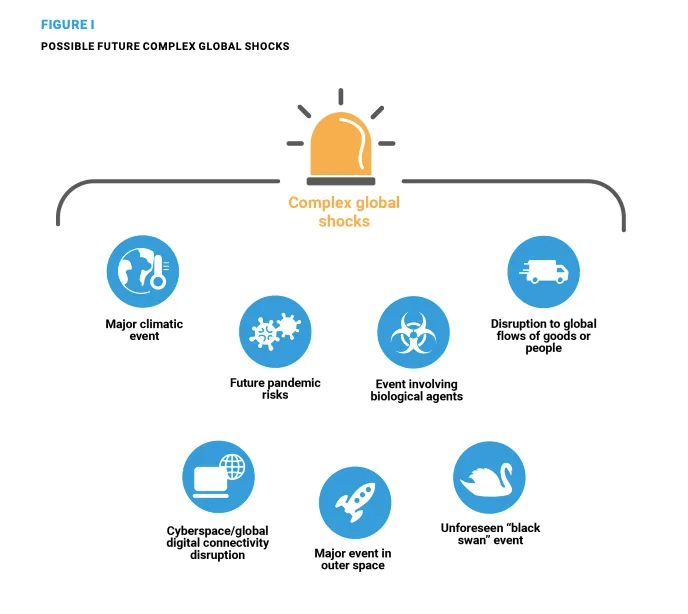
United Nations recently published a policy brief on the twelfth commitment of Our Common Agenda – Emergency Platform. This commitment establishes the need to improve preparedness in more areas besides global health crises (such as pandemics) and will give UN extensive powers in a new crisis situation.
 PERCEPTION RESET