
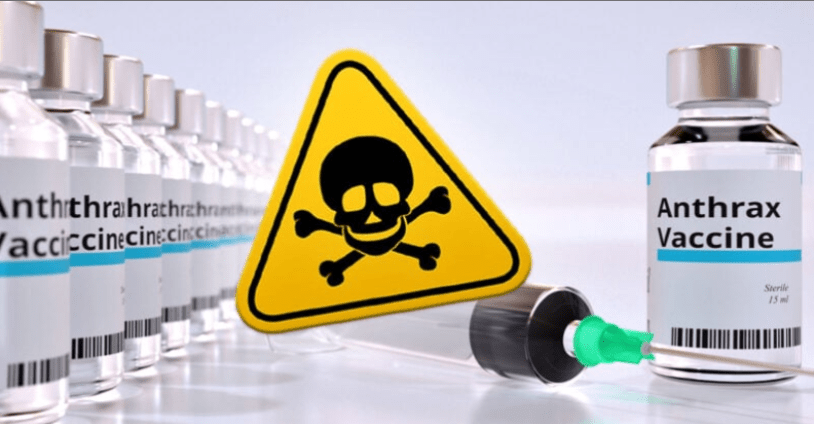
“You can’t make this stuff up,” wrote Meryl Nass, M.D., commenting on the lack of efficacy, toxic ingredients and major side effects associated with Emergent BioSolutions’ new anthrax vaccine that won FDA approval last week.
Emergent BioSolutions’ new anthrax vaccine contains dangerous toxins and may cause severe side effects, according to the product’s package insert.
The U.S. Food and Drug Administration (FDA), which approved the vaccine last week, posted the package insert late Friday.
“Is this a label or a cartoon?” asked Meryl Nass, M.D., a bioterrorism and anthrax expert who published an analysis of the insert on Substack. “You can’t make this stuff up,” she said.
The insert reports that Cyfendus uses two adjuvants, an aluminum adjuvant and a new synthetic adjuvant — CPG7909. The vaccine also contains a saline solution containing formaldehyde and benzethonium chloride as preservatives.
Aluminum adjuvant is a known cytotoxic and neurotoxic substance used to induce autoimmunity in lab animals.
Peer-reviewed research published in Neuromolecular Medicine linked the aluminum adjuvant in the existing anthrax vaccine to Gulf War Illness (GWI), a cluster of symptoms including muscle aches, joint pain, dizziness, memory lapses, headaches, fatigue, insomnia, emotional disorders, posttraumatic stress reactions, headaches, and memory loss.
Hundreds of thousands of Gulf War veterans suffered with GWI, but so did many troops who were never deployed but who had also been vaccinated against anthrax — which led researchers to study the vaccine as a likely cause of the illness.
According to The BMJ, aluminum adjuvants are associated with numerous adverse effects, including injection site pain and tenderness, persistent lumps, granulomas, contact dermatitis, post-immunization headache, macrophagic myofasciitis and autoimmune/inflammatory syndromes.
Research has also found a strong link between aluminum exposure and asthma, Alzheimer’s disease and autism.
Formaldehyde is a known carcinogen and benzethonium chloride, an ammonium compound often found in detergents, is highly toxic if ingested.
 PERCEPTION RESET