
As a steadfast advocate for women’s rights and gender equality for decades, my journey has taken me through tides of societal change. I’ve witnessed the evolution of the feminist narrative, growing from a call for equality to a more nuanced discourse encompassing myriad intersecting issues.
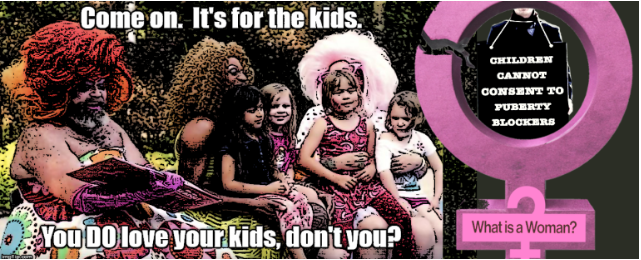
However, three issues of the moment strike a dissonant chord: the assertion by some men that they can be women let alone even ‘better’ women, the fairness of men pretending to be women participating in women’s sports, and the sinister, confusing and distressing impacts of contemporary gender education on children.
Misogyny
Misogyny, the ingrained prejudice against women, has a pervasive influence on society. It’s an unsettling irony that some men now believe they can be women or even ‘better’ women, essentially claiming a superior interpretation of the gender they traditionally sought to suppress.
The assertion stems from archaic societal norms, defining womanhood based on stereotypes and expectations that the feminist movement has battled to dismantle. This approach echoes an era when women’s roles were rigorously defined and their behaviours tightly controlled.
However, the essence of being a woman isn’t a performance, an act that can be evaluated and ranked.
Every woman’s life is an intricate tapestry of experiences, coloured by triumphs, heartbreaks, love, loss, and everything in between. Womanhood is influenced by various cultural, racial, socioeconomic, and personal factors, which resist distillation into a single universal definition.
Thus, insinuating that man can be a woman or even a ‘better’ woman not only oversimplifies this complex reality but also reduces womanhood to a competitive role-play.
Sport
The issue of transgender women (“men” pretending to be women) participating in women’s sports has stirred passionate debates globally.
The crux of this contentious issue lies in the inherent biological differences between men and women. Men, by virtue of their physiology, usually have denser bones, more muscle mass, and higher quantities of testosterone, which contribute significantly to athletic performance.
Such differences are not eliminated even with hormone therapy, which is a requirement in many sporting institutions for transgender women (“men” pretending to be women) to compete in women’s categories.
Consider the case of Rachel McKinnon (now known as Veronica Ivy), a transgender woman athlete, who, in 2018, won the UCI Masters Track Cycling World Championship in the women’s 35-39 age category.
Ivy’s victory ignited controversy and reignited discussions about the fairness of her participation. Critics correctly argued that despite hormone therapy, Ivy still retained some of the physiological benefits from male puberty, giving “her” an unfair advantage.
Similarly, in 2017, Laurel Hubbard, a New Zealand weightlifter and a transgender woman (man), won the women’s over 90kg division at the Australian International, outperforming her nearest competitor by a significant margin.
Hubbard’s participation and victory raised concerns about the potential advantages “she” might have had over her competitors who happened to be real women.
The participation of transgender women athletes in women’s sports isn’t a question of denying their rights or questioning their identities.
Instead, it’s a matter of ensuring a level playing field for all female athletes.
As someone who has been advocating for women’s rights for decades, I believe it’s critical to continue working towards ensuring sports remain fair, competitive, and inclusive.
Yet, this inclusivity must not compromise the essence of fair competition, especially when natural biological differences could affect the outcome.
What is a woman?
One question that seems to be often sidestepped in many discussions with transgender women (men) is: “What is a woman?”
It appears that many choose not to or cannot answer this question, possibly because it prompts deep reflection on the reality of biological sex, an inconvenient truth for men claiming to be something they simply are not.
These individuals often choose to redefine womanhood based on subjective feelings, social constructs, and personal experiences rather than the scientific reality of biology.
This shift away from the objective, biological definition is problematic as it creates a chasm between what is perceived and what is a biological reality.
Biologically speaking, the definition of a woman is relatively straightforward.
A woman is typically characterized as an adult human female with two X chromosomes. They possess the biological framework for menstruation, pregnancy, childbirth, and lactation — capabilities embedded within their biological makeup from birth. Women also typically exhibit secondary sexual characteristics such as the development of natural breasts and a clitoris.
This biological definition does not discount the lived experiences of those women who, for various medical reasons, may not be able to conceive or have other medical conditions that impact typical female biology. It is not the ability to conceive or menstruate that defines a woman, but the fundamental biological structure that would naturally allow for these functions.
While gender identity is allegedly a personal inner sense of one’s gender, biological sex is a physical reality determined by our DNA. The societal roles and behaviours associated with gender are mutable and have indeed changed over time. However, biological sex is an unchangeable aspect of our human nature.
It’s essential to respect every individual. Yet, this respect should work both ways, and it should not eclipse the scientific realities that underpin our existence.
The boundaries of womanhood should not be expanded to the extent that the term “woman” loses its biological and scientific significance.
It’s more critical than ever that we safeguard the objective definition of womanhood. Because “men” are trying to hijack it and take control once again.
 PERCEPTION RESET