
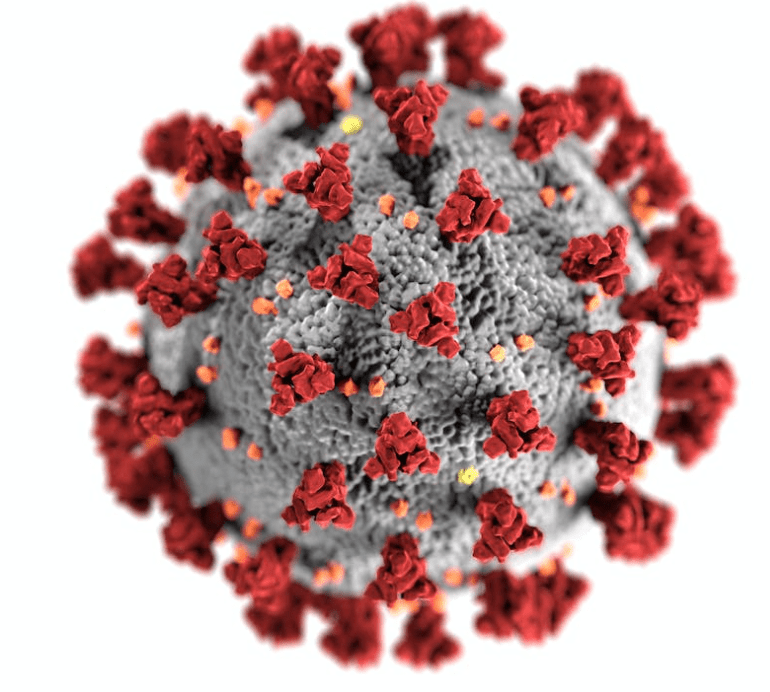
The way most narratives unfold tends to involve the mainstream media providing the official narrative with the alternative media providing the counter-narrative.
We are therefore given the impression that we need to make a choice between these 2 options as if they represent the only viewpoints on the subject. In other words, we are given a choice from each ‘side’ that equates to: ‘you’re either with us or against us’.
In the majority of cases this is a false dichotomy, because there are usually other options.
The narrative about ‘Covid’ is a case in point. The 2 options we’ve been offered are: that it was caused by a natural ‘virus’ – the mainstream view – or that it was a ‘lab-created virus’ – the alternative media view.
The truth is that neither of them is correct, because they both rely on the underlying assumption that there are such entities as ‘pathogenic viruses’. However, as many of us have been explaining for the past 3 years and more, there is no evidence for the existence of ‘pathogenic viruses’. It is important to also emphasise that there is no evidence for the existence of pathogenic bacteria, fungi, or parasites either!
It is clear that there is an agenda to maintain the belief in ‘pathogens’ of one sort or another, which is why it is important to keep exposing the narratives that make such claims, however they are framed – and the establishment is definitely finding new ways of framing their stories.
Which brings me to the reason for writing about bats!
A deeper aspect of the ‘Covid’ narrative is the idea that so-called ‘viruses’ can jump between species and that the diseases they are alleged to cause can therefore be transmitted from animals to humans; such ‘diseases’ are referred to as zoonotic. The WHO Zoonoses fact sheet defines a ‘zoonosis’ as,
“…any disease or infection that is naturally transmissible from vertebrate animals to humans.”
Why is this relevant you may ask. There are, in fact, a number of reasons.
An important clue to some of those reasons can be found in the statement on the WHO fact sheet that,
“They represent a major public health problem around the world due to our close relationship with animals in agriculture, as companions and in the natural environment.”
The idea that ‘diseases’ are a matter of ‘public health’ is erroneous. Health problems are always unique to the individual experiencing the symptoms that are referred to as ‘diseases’, which are simply different combinations of symptoms that, for the most part, represent the body’s efforts to self-heal.
However, the false idea that we can affect the health of other people – a key factor in the ‘Covid’ narrative – serves the purposes of the ‘would-be controllers’ to further their agenda.
This is not just a matter of refuting the existence of pathogenic ‘viruses’ because, as mentioned above and as the WHO asserts,
“Zoonotic pathogens may be bacterial, viral or parasitic…”
Some further key points can be found in the following paragraph of the WHO fact sheet,
“Zoonoses comprise a large percentage of all newly identified infectious diseases as well as many existing ones. Some diseases, such as HIV, begin as a zoonosis but later mutate into human-only strains. Other zoonoses can cause recurring disease outbreaks, such as Ebola virus disease and salmonellosis. Still others, such as the novel coronavirus that causes COVID-19, have the potential to cause global pandemics.”
It’s interesting to note that ‘HIV’ is now referred to as a disease whereas it is merely the name given to a particle that is erroneously regarded as a ‘pathogenic virus’. Furthermore, although it is claimed that HIV originated as a simian ‘virus’, known as SV40, this has never been proven.
 PERCEPTION RESET