
By Down the Chupacabra Hole
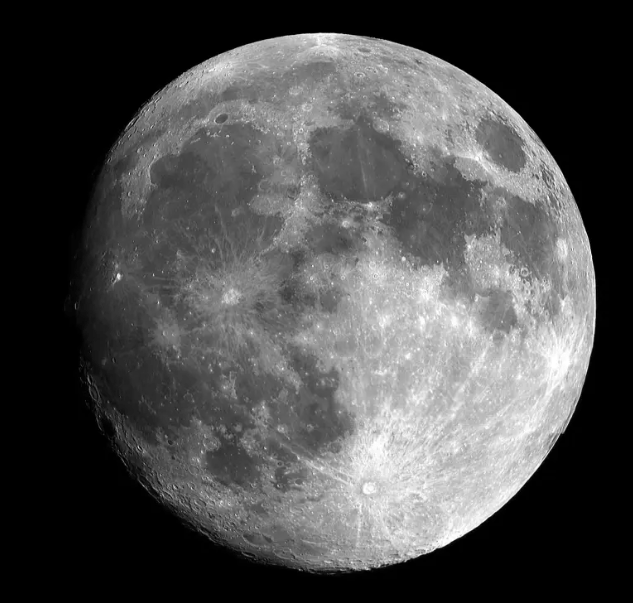
Each night the moon makes its majestic appearance. Without this luminous sphere, our planet would be a vastly different place. It is responsible for the ocean’s tides, seasons, temperatures, and Earth’s very rotation. Both humans and animals are affected by the lunar presence. Scientists have theories about the planetary object’s origins yet all remain mere speculation. Some researchers disagree with current hypotheses and have proposed an intriguing conclusion. They argue the moon is an artificial satellite intentionally placed into orbit by advanced extraterrestrials.
“The Moon is bigger than it should be, apparently older than it should be and much lighter in mass than it should be. It occupies an unlikely orbit and is so extraordinary that all existing explanations for its presence are fraught with difficulties and none of them could be considered remotely watertight.” -Alan Butler, Who Built the Moon?
Lunar Lore Throughout History
While the notion that the moon is a synthetic celestial body may seem unimaginable, it has been discussed for thousands of years. Our ancient ancestors who had no contact with one another all shared nearly identical stories about a “time before the moon”. Greek philosophers Aristotle and Plutarch referenced an age in which the astronomical orb did not exist. In Africa, Zulu legends chronicle how the planetoid was similar to an egg with its yoke removed. Certain Native American tribes believed their evening spotlight was brought here by advanced alien beings. Indigenous Colombians recounted a pre-lunar civilization in their writings. These diverse groups all describe a terrible cataclysm upon the moon’s arrival. Widespread fatalities reduced the population to a single race. Modern science has ascertains that humans share one common ancestor: Mitochondrial Eve. Might it be plausible ancient fables may be in fact be knowledge of events long forgotten?
Rang Like a Bell & Strange Sounds Emitting
Prior to mankind’s historic cosmic ventures, Apollo 10 traveled to the dark side of the moon. During radio transcripts, the astronauts recount hearing “eerie outer space music”. Bizarre electromagnetic tones similar to the frequencies recorded inside Saturn’s rings were clearly audible. A dreadful otherworldly orchestra encompassed the ears of every voyager. NASA representatives quickly dismissed the acoustic oddity and blamed radio waves interfering with the moon’s magnetic field.
However, their argument is not applicable as the satellite does not possess a magnetic field. Apollo 12 infamously landed on the moon in November of 1969 and its intense force produced an artificial earthquake. Seismic devices registered the impact covered a forty-mile range. Astonishingly, the object rang like a bell for over thirty-five minutes. Aerospace officials were greatly intrigued by this phenomenon. On the following mission, executive personnel decided to send a heavier rocket and document the results. Apollo 13 was deployed and its module struck with the equivalence of eleven tons of TNT. For three hours, the planetoid reverberated with sounds similar to a massive gong. Such acoustics would be physically impossible for a solid mass to produce.
Anomalous Crater Depths & Unnatural Metallurgic Composition
Earth’s ever-revolving companion is laden with millions of craters in varying diameters. Size and force of impact dictate how large or small the indentation will be. With such a broad range in breadth, one would expect to see varying depths. Perplexingly, all cavities have staggeringly shallow proportions, as if a protective metallic barrier is shielding the moon’s interior. Another chilling factor is its chemical composition. Cosmonauts attempted to drill into several craters but could barely penetrate the surface. After multiple failed boring attempts, metallurgists performed extensive tests on the materials. Analysis lead to a startling conclusion: the elements were not naturally occurring. Brass, titanium, and mica comprise the ethereal sphere— compounds often utilized in architectural design.
Structures on the Surface
On November 23, 1966, a manned orbiter took photographs of the lunar surface. Shockingly, six enormous megalithic structures were captured on film. It was a groundbreaking discovery that made the front page of newspapers including LA Times and Washington Post. The monoliths feature incredible geometric precision and unnatural right angles. Researchers estimate the towers could be taller than skyscrapers found on Earth. Russian space engineer, Alexander Abramov, studied these perplexing images and noted the spire’s arrangement accurately matched the Great Pyramids of Giza.
NASA claimed the architectural anomalies were an optical illusion and publicly declined further investigation. Nevertheless, years later, Apollo 17 obtained additional shots of these peculiar monuments. For decades prior, poor-quality images of the moon circulated. Things changed in 1994 after Jose Escamilla colorized several black and white photos acquired from a new shuttle. With this alteration, previously indecipherable details became apparent. Through his minor edit, several colossal formations became distinctly visible.
 PERCEPTION RESET